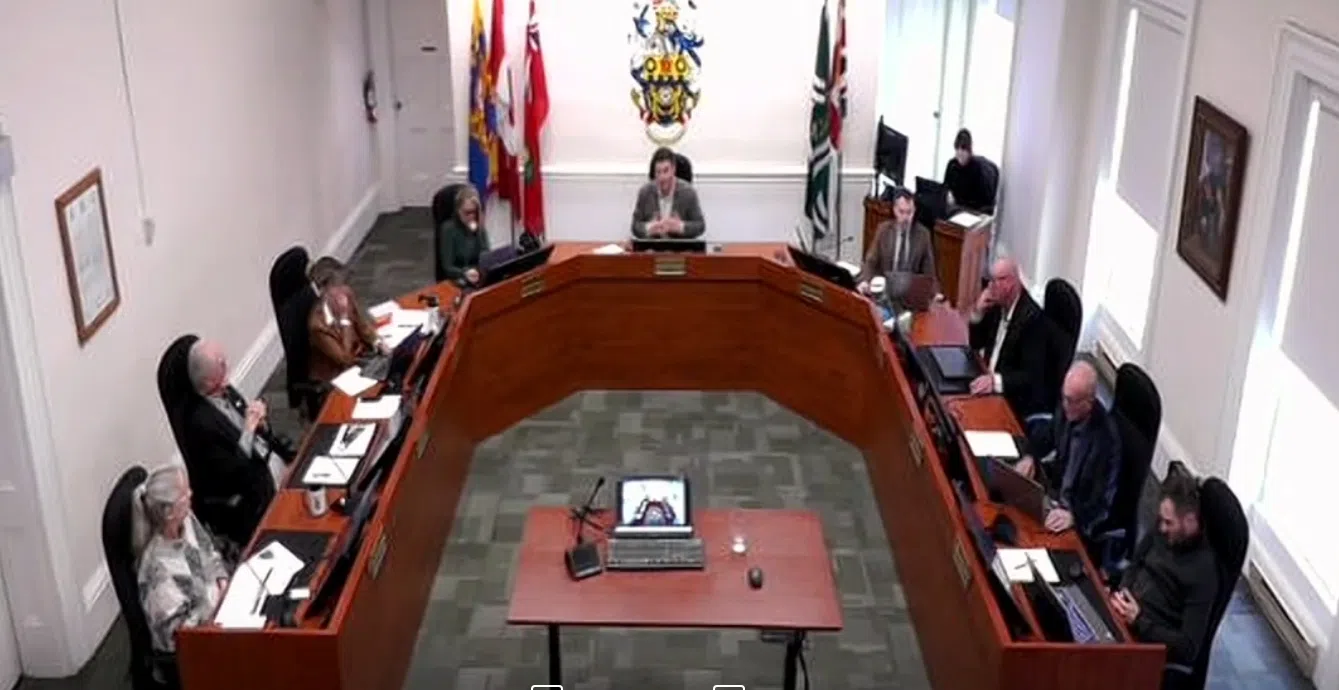
Cobourg’s police leadership delivered a detailed presentation to council at a special meeting this week, outlining a proposed 20.5 percent increase to the police budget while responding to concerns about rising operational costs, transparency, and the procedural complexities of Ontario’s Strong Mayor powers.
Chief Paul VandeGraaf began by addressing compliance costs stemming from the provincial Community Safety and Policing Act (CSPA). He said the service is currently about 85 per cent compliant with mandated supervisory and training requirements, and expects to pass 90 per cent by January. The training, he explained, includes tiered EMS certification levels and additional acting supervisory compensation, all of which drive up labour costs. That legislative compliance, he said, is “not optional” and must be reflected in the budget.
One of the most candid portions of the session came when the Chief acknowledged that past budgeting decisions, including his own, had artificially held down police spending. Six out of ten previous budgets came in under three per cent, including a zero-per-cent increase during the pandemic. He described those years as having “leaned out” the organization, including budgeting officers by their actual salary tier rather than by full first-class rate. While this approach temporarily suppressed budget growth, it provided little ability to absorb costs now, forcing a sharp single-year increase instead of gradual annual adjustments.
Director of Finance Adam Giddings translated the increase into property-tax terms: each one-per-cent rise on the levy equals roughly $343,000. The requested police budget amounts to a 4.89 per cent increase to the levy attributable to policing alone. Councillors noted this impact is significant, but also a direct consequence of past years in which council pushed for low police budget growth.
Council also pressed for clarity on what counts as “adequate and effective” policing. VandeGraaf noted that the standard is defined provincially, and locally delivered through policies set by the Police Services Board. Requirements include 24-hour response capacity, minimum officer training standards, and investigative resources, all of which carry staffing and salary implications.
The second half of the discussion focused heavily on governance tensions introduced under Ontario’s Strong Mayor legislation. Several councillors raised concerns that council may only vote yes or no on the final police budget, without the power to amend specific line items. The Mayor confirmed this is correct: council exercises high-level approval authority, but not selective alterations. The governing structure is shared between the Police Services Board, council, and the Province.
Transparency and documentation access emerged as a repetitive concern, with councillors arguing they should not need to “chase information” across committees and formats. The Mayor and staff clarified that the current meeting was not a formal budget debate, and therefore budget sheets were not attached publicly. Once the Mayor formally presents the budget (currently targeted for December 8) all councillors and the public will have equal access to the full documentation.
Councillors also questioned labour negotiations, court security staffing, the use of special constables, and the reliance on tiered policing models. VandeGraaf defended the practice, noting that part-time special constables staffing the courthouse provide flexibility and are significantly cheaper than using fully-sworn officers. Minimum staffing levels for court security are mandated, he added, citing a past legal case in which a chief faced contempt for refusing required coverage.
The meeting ended with a summary of next steps: once the Mayor’s full municipal budget is released on December 8, council will have 30 days to respond. That triggers the formal approval period under Strong Mayor legislation, after which council will vote on the total municipal budgetl, including the police portion, with no ability to alter individual police line items.
Ultimately, council, the Police Services Board, and the community now face the difficult task of reaching a budget resolution that balances public safety needs with the financial realities facing Cobourg taxpayers.
(Written by: Joseph Goden)